
Prime Field Service millwrights Grouting & Foundation
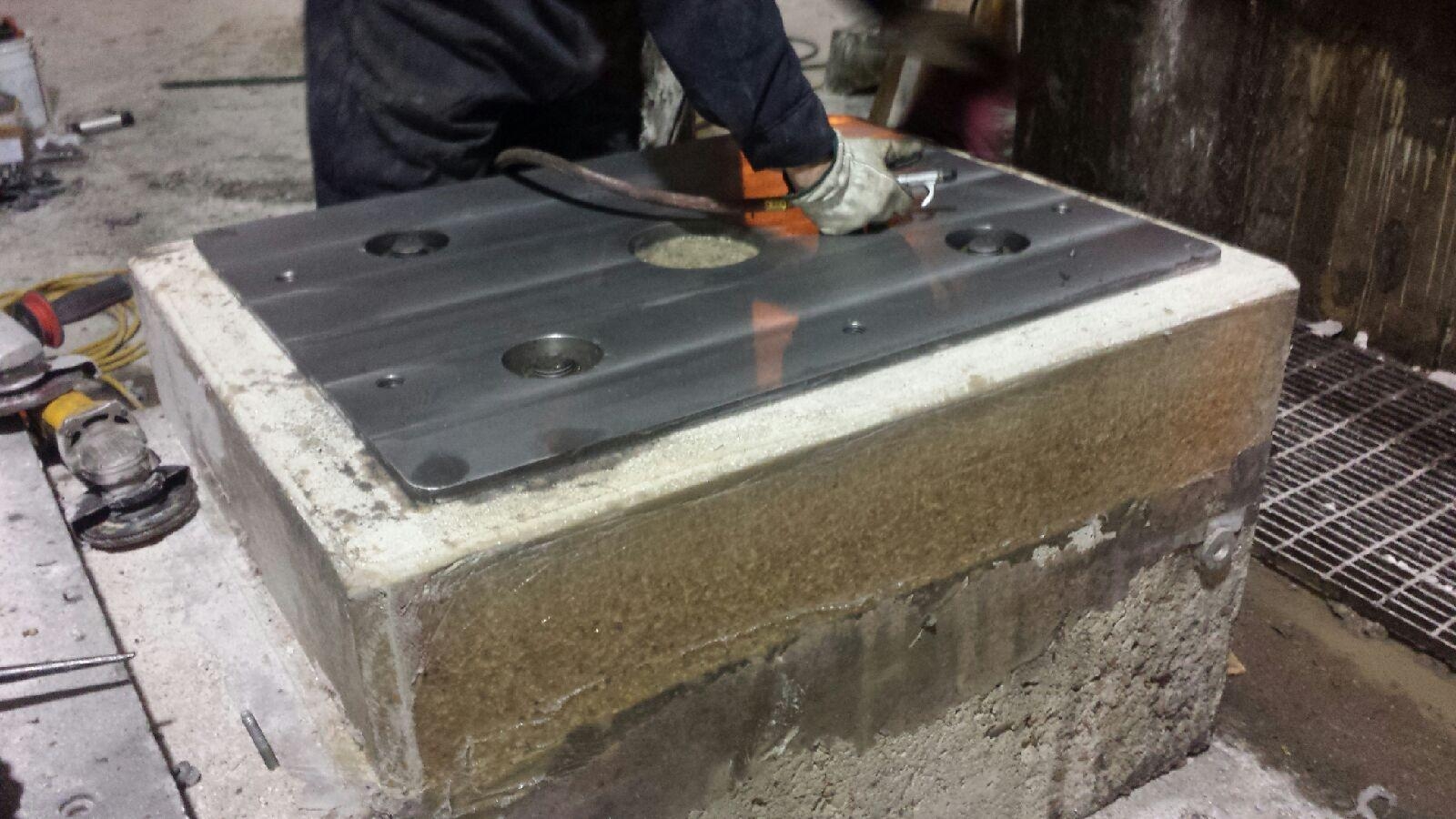  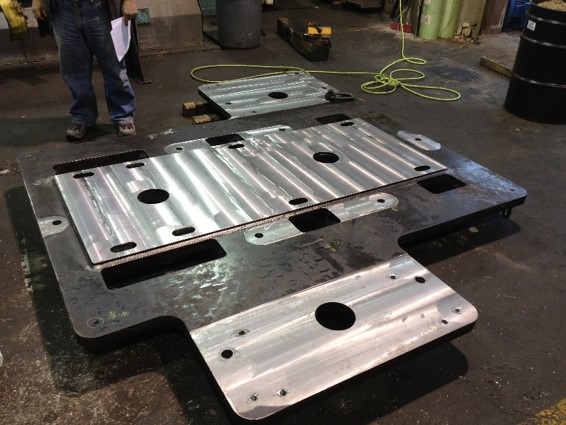  |
Our skilled millwrights are experts at setting soul plates and grouting them in place. The millwrights are experienced with correct soul plate design. A correctly designed and installed foundation soul plate will Prevent Failures:
a. Lower Vibration by increasing rigidity b. Provide level base to begin alignment and reduce soft foot issues. yielding improved longevity and reducing operational costs. We are able to design, fabricate, machine and install new soul plates for you. Some foundation problems have been solved with deep grout pours. Our millwrights will provide you with skilled rigging, installation, and alignment of your equipment in addition the the setting of soul plates.
|
The support provided by a grout is based on the Effective Bearing Surface Area (EBSA).
This can be affected by grout leakage, un-level plate, shrinkage of grout,
inadequate mixing of grout, wrong placement method, insufficient bonding,
poor grout flow, improper preparation, or entrapped air voids.
Low EBSA can lead to point loading on the grout which in turn can result
in cracking and crumbling of the grout under the base plate and “soft foot”.
This could have disastrous consequences on the machine.
Cementatious grouts mainly rely on expansion to provide their “non-shrink” properties.
This expansion needs to be confined under the base plate,
but if allowed to expand freely, the grout may crack due to excess shrinkage.
This shrink cracking is often seen where a cement grout has not been finished properly.
Epoxy grouts are not affected as much as they have low inherent shrinkage.
Many sand and cementatious grouts are not able to resist continuous
impact loading such as under vibrating machinery. Cement grouts are weak
in tension and undergo fatigue failure. This can have serious repercussions
on safety and the cost of remediation can outweigh the initial
short-term cost benefit a hundred fold.
Epoxy Grouts offer improved strength and resistance to many industrial
chemicals that would typically destroy conventional cement grouts.
Industrial foundations are often subject to chemical attack.
If the foundation mass is reduced by chemical attack,
so is its effectiveness as a support and damping mechanism.
Prime Machine recommends epoxy grouts in all mission critical applications.
Some of the products we often use are:
- Felpro
- EscoWeld
- Chockfast
- Unisorb V-100
- CWC 604
- Nordbak
- 5-Star
- Devcon
- Belzona